

Bowling Green, October 6, 2025
News Summary
The Bowling Green Food School is offering Thai cooking classes aimed at educating participants about culinary traditions. Led by Anna Kulka, attendees learn to create traditional Thai dishes using authentic ingredients. The school also faces challenges as proposed cuts to safety net programs could impact meal funding for students in the local area. As community support grows, local initiatives aim to combat food insecurity, emphasizing the importance of accessible nutrition for families and children.
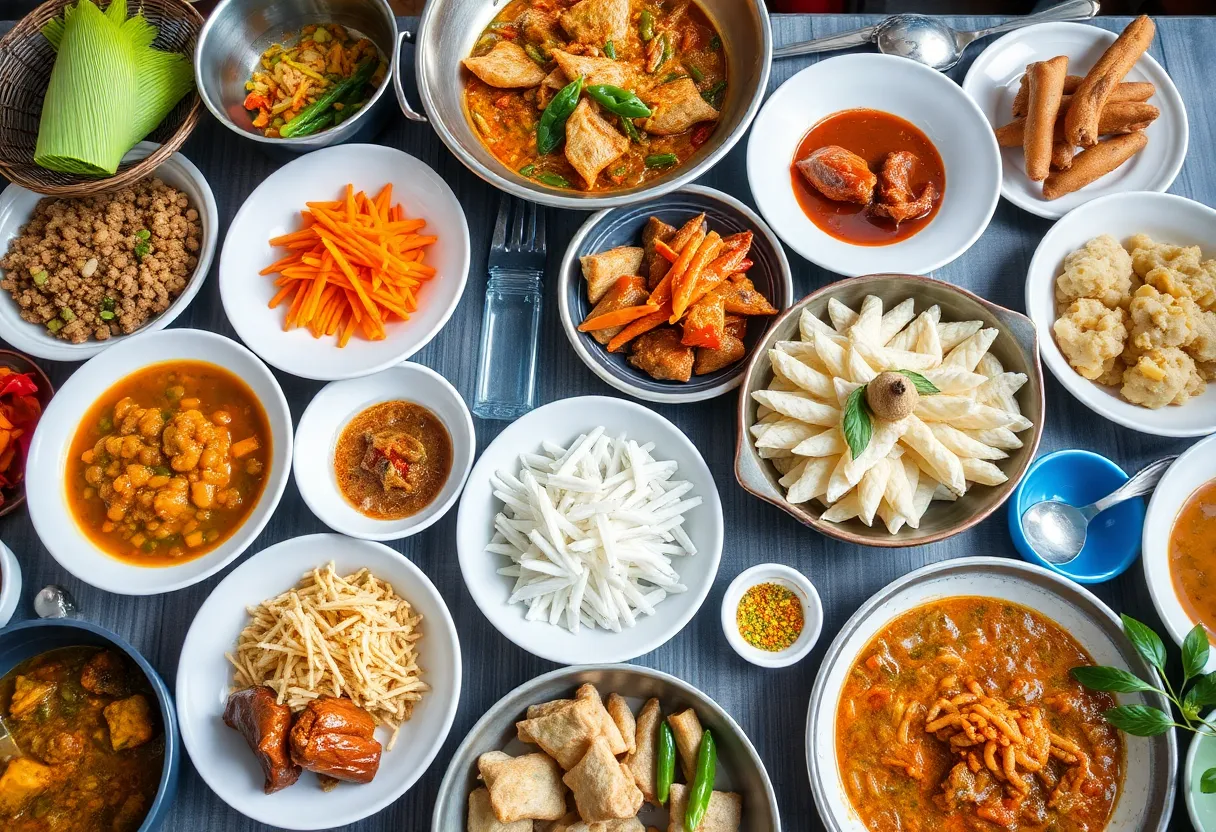
Bowling Green – The Bowling Green Food School is currently hosting Thai cooking classes at the SOKY center, aiming to immerse participants in culinary traditions from various cultures. This week’s focus is on traditional dishes from Thailand, where attendees are learning to prepare a variety of meals using authentic ingredients and cooking tools provided by the Food School. The classes are run by Anna Kulka, the founder and lead instructor, who was born and raised in Thailand and emphasizes the unifying power of food in bringing people together. The next cooking class is scheduled for December 9th, and tickets can be purchased at thebgfoodschool.com.
However, as the Food School is fostering cultural appreciation through food, local students are facing potential meal accessibility challenges due to proposed federal cuts to safety net programs. If these cuts are enacted, it could lead to reduced funding for school meals, impacting students who rely on free meals at school. Households enrolled in programs such as Medicaid and SNAP currently have their children automatically qualify for free meals, but with proposed changes, many students in Bowling Green may lose that access.
Dalla Emerson, the food service operations director at Bowling Green city schools, confirmed that low-income households qualify for meals and that federal meal funding for schools might decrease if families lose direct qualifications for free meals. In Kentucky, over 92% of schools utilize a federal program that assists with meal funding. Additionally, the Community Eligibility Provision (CEP) makes meals accessible for all students in qualifying schools. If qualifying students drop below 25%, schools may lose their CEP eligibility, further complicating access to meals for students from low-income families.
Emilson highlighted that public school cafeterias typically operate on slim margins, making it challenging to manage the impact of federal funding cuts. This situation is alarming as approximately one in five children are food insecure in the areas served by Feeding America Kentucky’s Heartland. Local resident Adriene Whittaker voiced her concerns that cuts to subsidized meals would compel her to seek a second job to support her family. She noted that school meals play a vital role in enabling families to cope and ensuring children thrive in their studies.
Anticipated cuts could impose financial strain on families just above the income threshold to qualify for free meals directly. Emerson criticized the decision-making process that puts more emphasis on other funding rather than meal programs essential for children’s nutrition. The potential increase in the qualifying percentage for the CEP to 60% could result in many schools losing their eligibility for the program, further marginalizing students in need.
Opposition groups suggest that food assistance resources should be allocated more judiciously, considering that nearly 47 million Americans experience food insecurity, including 14 million children. Advocates stress the critical aspect of child nutrition for both educational and health outcomes. In response to these challenges, local initiatives, such as Warren County Public Schools’ summer nutrition program, have been instituted to combat food insecurity. Schools are also implementing drive-through food drives, allowing families to collect essential meals, with options for six days’ worth of food available from designated pick-up locations, thus saving their households money.
Communities have demonstrated their generosity in supporting local students. Donations from community members, such as a $1,000 check from a local family, help alleviate student lunch debts and foster a culture of giving in Bowling Green. This commitment to supporting children and families has been emphasized by local leaders in both education and food service sectors, highlighting the need for continued focus on accessible nutrition and meal programs in the area.
Frequently Asked Questions (FAQ)
- What types of cooking classes does the Bowling Green Food School offer? The Bowling Green Food School is hosting cooking classes that highlight different cultures, with a focus on traditional dishes from Thailand this week.
- When is the next cooking class scheduled? The next cooking class is scheduled for December 9th; tickets can be purchased at thebgfoodschool.com.
- What are the potential impacts of proposed federal cuts to safety net programs? Proposed federal cuts to safety net programs could reduce funding for meals served by school districts nationwide, affecting students’ access to free meals.
- How do households qualify for free meals currently? Households enrolled in programs like Medicaid and SNAP automatically qualify their children for free meals.
- What is the Community Eligibility Provision (CEP)? The Community Eligibility Provision (CEP) makes meals accessible for all students in qualifying schools, but if the percentage of students qualifying for free meals drops below 25%, schools could lose CEP eligibility.
- How prevalent is food insecurity in the area served by Feeding America Kentucky’s Heartland? One in five children are food insecure in the area served by Feeding America Kentucky’s Heartland.
| Key Features | Details |
|---|---|
| Event | Thai Cooking Classes at the Bowling Green Food School |
| Instructor | Anna Kulka |
| Next Class Date | December 9th |
| Proposed Cuts Impact | Potential reduction of funding for school meals nationwide |
| Community Impact | 1 in 5 children facing food insecurity in area |
| CEP Eligibility | Schools may lose eligibility if free meal qualification drops below 25% |
Deeper Dive: News & Info About This Topic
HERE Resources
Bowling Green Food School Celebrates Thai Cuisine
Additional Resources
- WBKO: Thai Cooking Class Shares Culture & Cuisine
- BG Daily News: Proposed Cuts to Medicaid & SNAP
- Spectrum News: WCPS Hosts Food Drive
- 13abc: Family Pays Off Lunch Balance Debts
- Food Service Director: Summer Fun in Bowling Green
- Wikipedia: Food Security
- Google Search: Food Insecurity in the US
- Google Scholar: Child Nutrition
- Encyclopedia Britannica: Community Eligibility Provision
- Google News: Food Assistance Programs

Author: STAFF HERE BOWLING GREEN WRITER
The BOWLING GREEN STAFF WRITER represents the experienced team at HEREBowlingGreen.com, your go-to source for actionable local news and information in Bowling Green, Warren County, and beyond. Specializing in "news you can use," we cover essential topics like product reviews for personal and business needs, local business directories, politics, real estate trends, neighborhood insights, and state news affecting the area—with deep expertise drawn from years of dedicated reporting and strong community input, including local press releases and business updates. We deliver top reporting on high-value events such as the National Corvette Homecoming, International Festival, concerts at SKyPAC, and sports events at Beech Bend Park. Our coverage extends to key organizations like the Bowling Green Area Chamber of Commerce and the African American Museum Bowling Green Area, plus leading businesses in automotive, apparel, and healthcare that power the local economy such as General Motors Corvette Assembly Plant, Fruit of the Loom, and Med Center Health. As part of the broader HERE network, including HERELexingtonKY.com and HERELouisville.com, we provide comprehensive, credible insights into Kentucky's dynamic landscape.